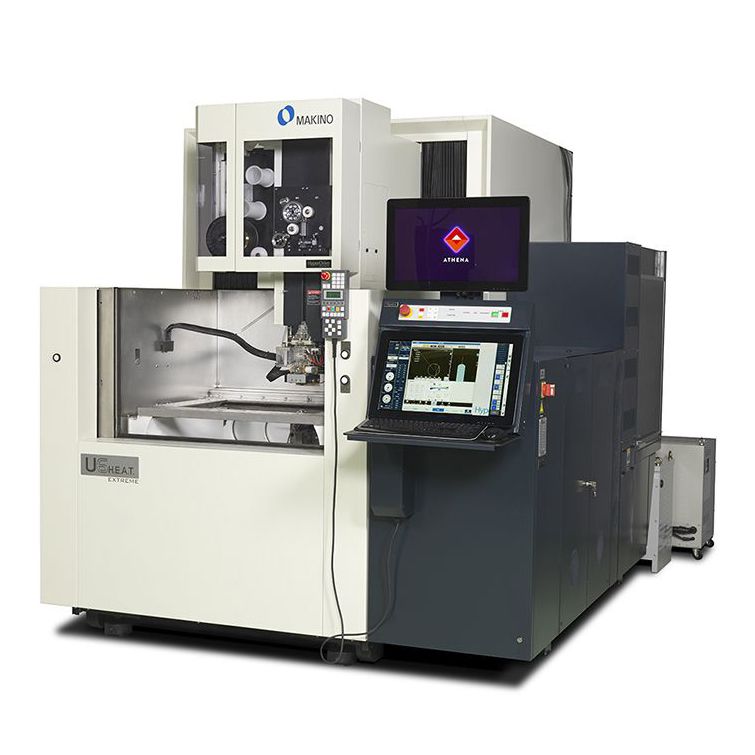
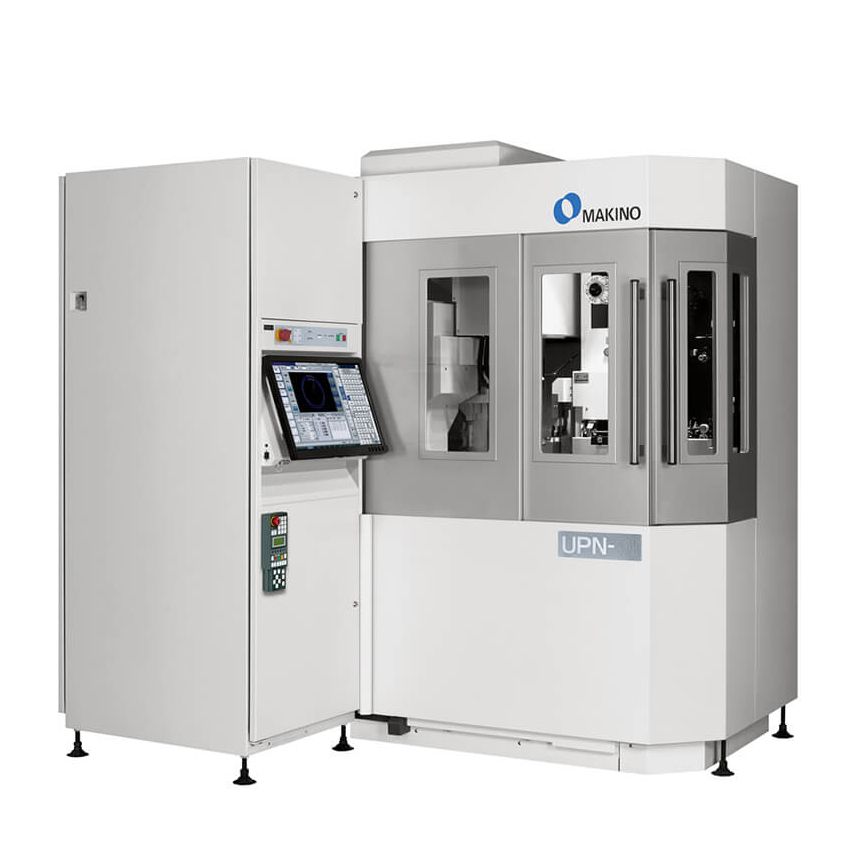
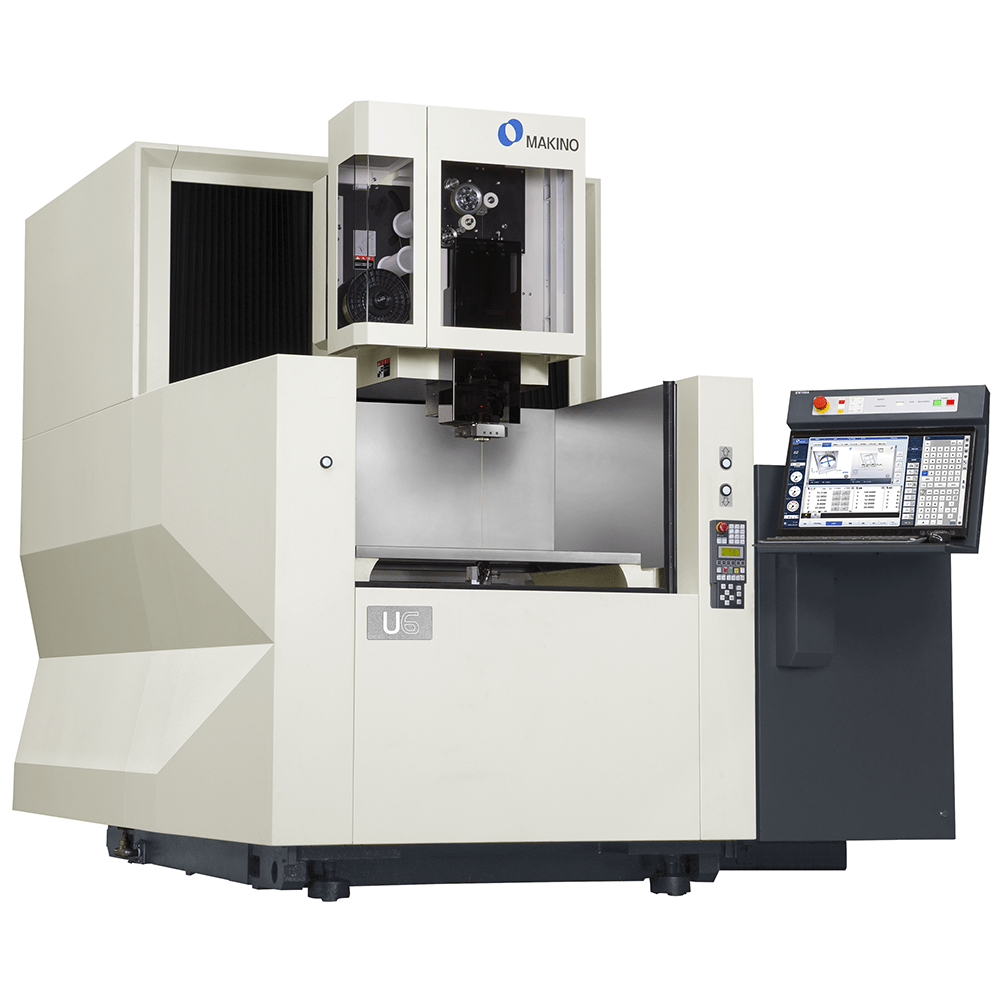
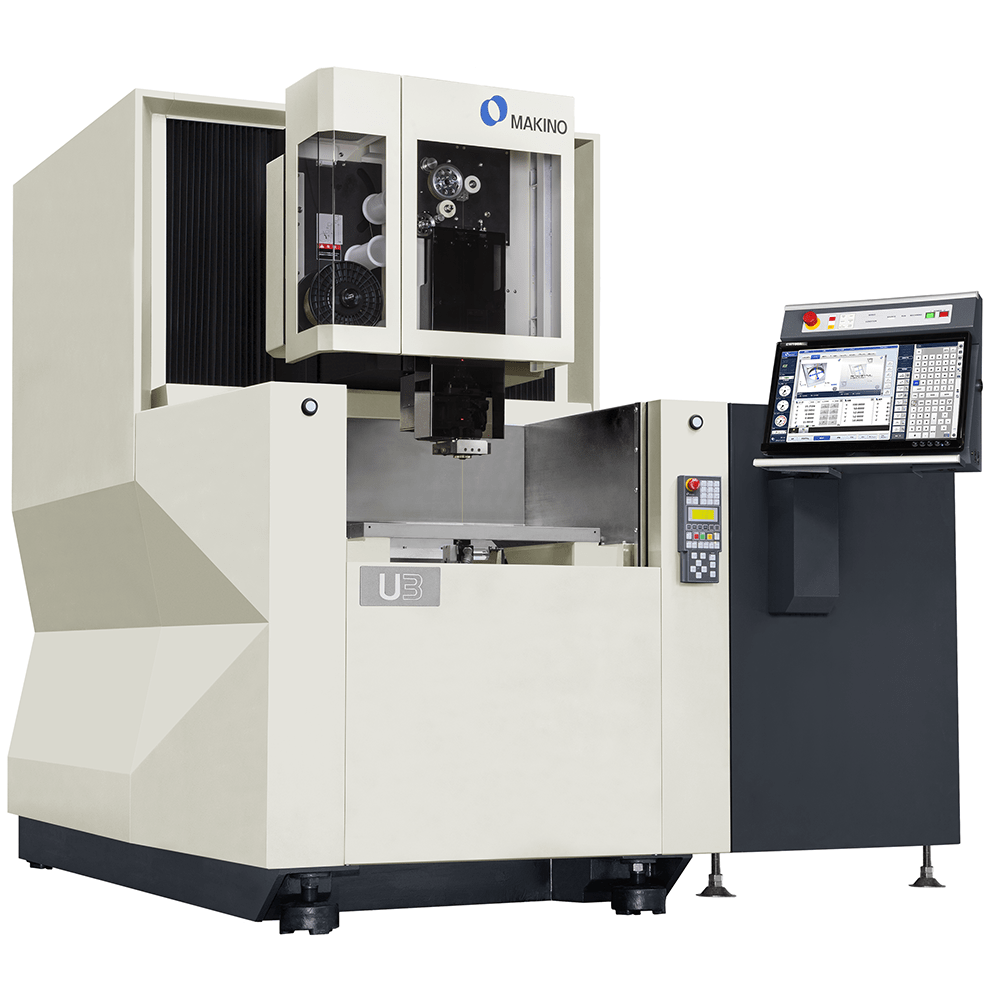
NCMT supplies Makino, wire EDM machines for precision machining of complex profiles, fine features and intricate geometries in electrically conductive materials.
Wire electrical discharge machining uses a continuously fed wire electrode and controlled electrical discharges to remove material without physical contact between the cutting tool and workpiece. This makes the process suitable for applications requiring high accuracy, narrow kerf widths, fine surface finishes or the machining of hard and difficult-to-machine conductive materials.
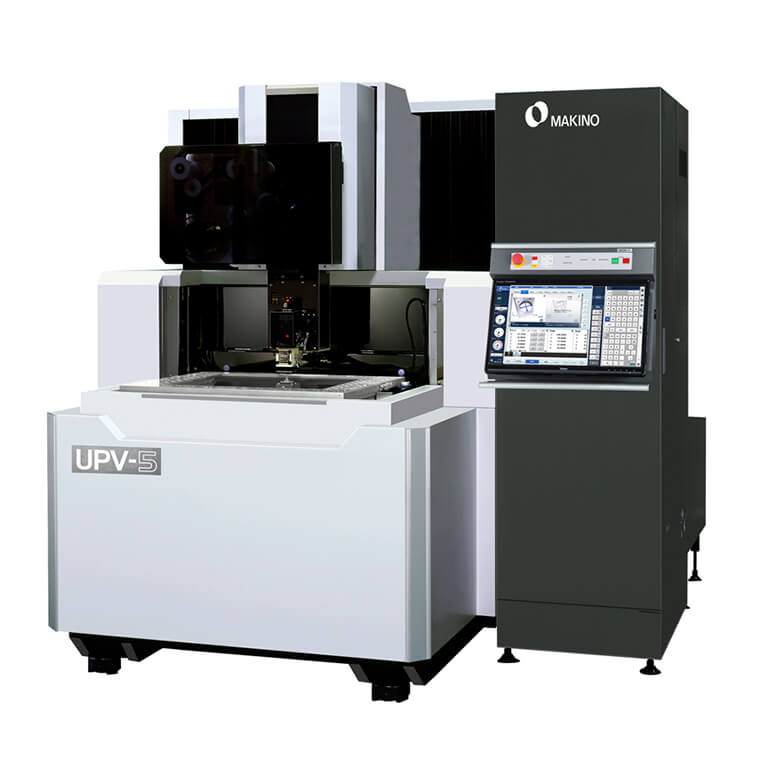
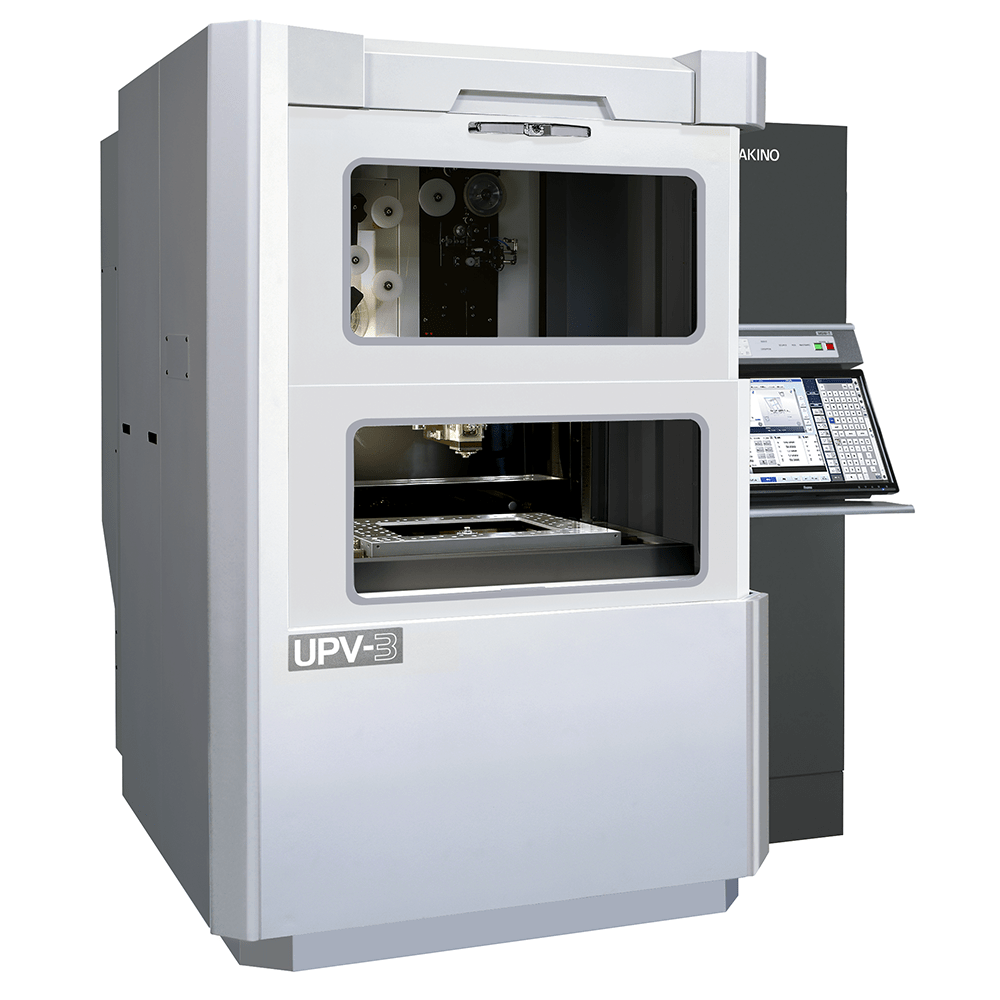
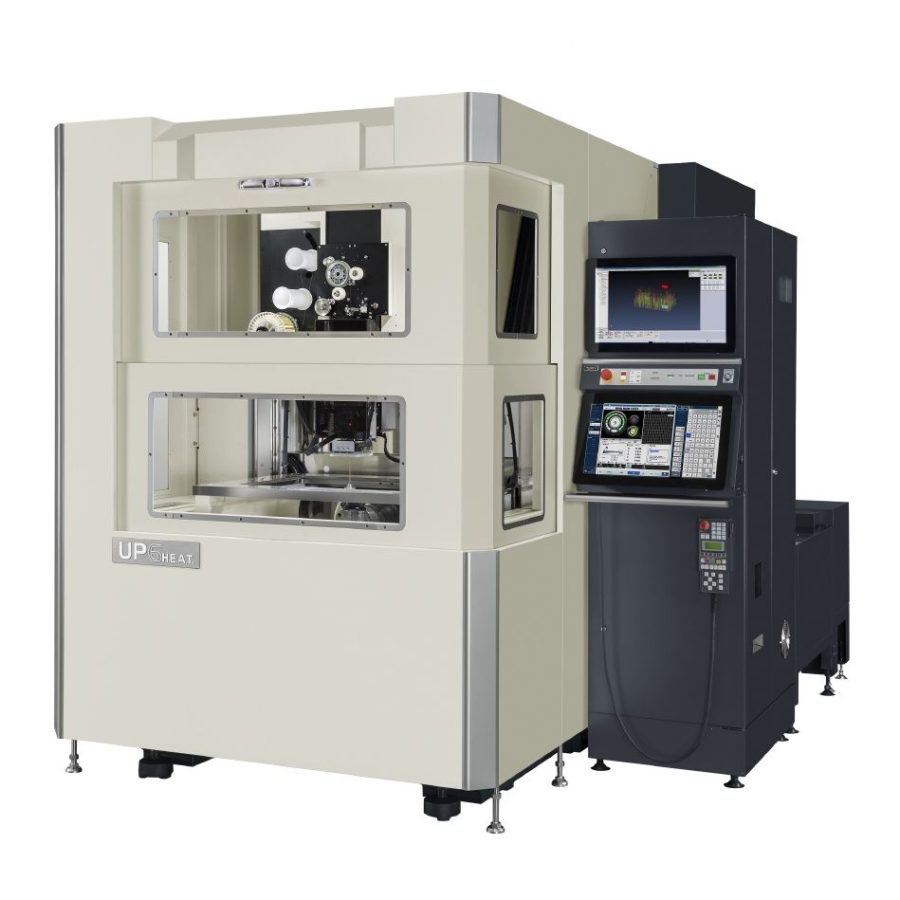
The Makino wire EDM range includes machines developed for different component sizes, accuracy requirements, surface finishes, cutting speeds and production strategies, from high-productivity applications to ultra-precision machining using fine wire.
NCMT’s applications engineers work with manufacturers to assess component geometry, material, tolerance, surface-finish and production requirements and identify the most appropriate wire EDM platform for the application.
Explore NCMT’s range of wire EDM machines and get in touch to discuss the appropriate machine for your production requirements.
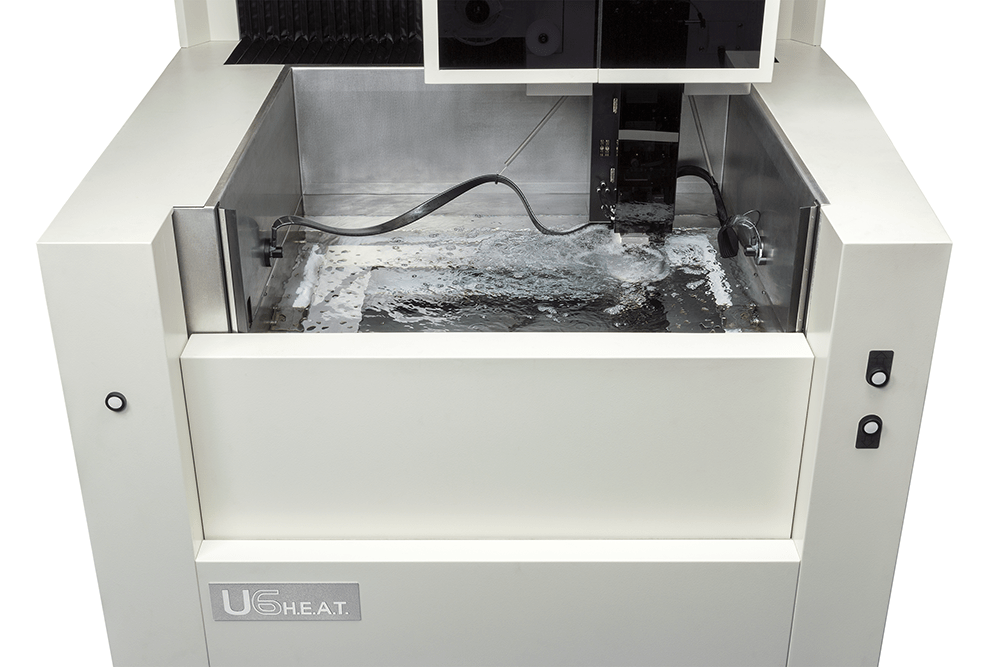
Deionised water is used on most general-purpose wire EDM machines because it supports high cutting speeds and effective flushing. Oil dielectric becomes more relevant where ultra-high accuracy, very fine surface finish or improved metallurgical quality is required.
Oil provides greater control of the discharge gap and allows machining at lower discharge energy, which can improve surface finish and precision. The trade-off is generally lower cutting speed, so the choice should be based on the required accuracy, surface integrity and productivity rather than dielectric type alone.
Wire diameter affects more than the minimum feature size. It also influences kerf width, achievable internal corner radius, cutting speed, wire tension, threading reliability and wire consumption.
Larger wire can support higher cutting rates where geometry permits, while fine wire is required for narrow slots, small radii and micro-scale features. Machine capability must also be considered because very fine wire places greater demands on wire guidance, tension control and automatic threading. The appropriate diameter should therefore be selected around the component geometry, accuracy, surface finish and production requirement.
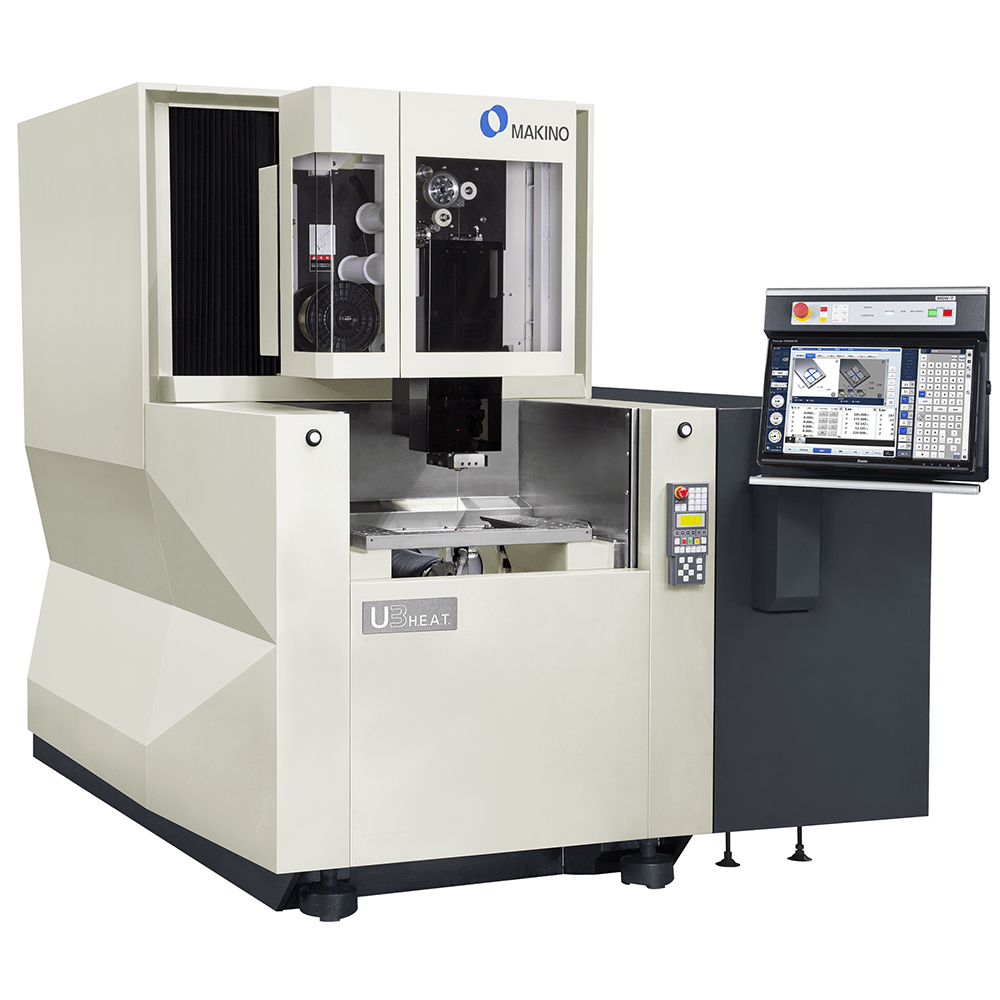
Makino H.E.A.T. technology is particularly relevant where cutting productivity is important and component geometry creates difficult flushing conditions.
The technology is designed to maintain cutting speed, part straightness and accuracy in applications such as variable-thickness components, interrupted surfaces and situations where sealed flushing cannot be maintained. Depending on the production requirement, H.E.A.T. and H.E.A.T. Extreme configurations provide different approaches to increasing wire EDM productivity.
The appropriate configuration should be selected according to component geometry, flushing conditions, wire diameter, required accuracy and overall cycle-time target.
Maximum rough-cut speed does not provide a complete measure of wire EDM productivity.
The required number of skim cuts, workpiece thickness, material, flushing conditions, wire type and final surface-finish requirement all influence total machining time. A faster roughing cut may not provide the lowest overall cycle time if additional finishing passes are required to achieve the specified accuracy, straightness or surface quality.
Machine comparison should therefore consider the total time required to produce an acceptable finished component rather than rough-cut speed alone.
Flushing becomes particularly important where component geometry restricts dielectric flow, including variable-thickness sections, interrupted cuts, openings and conditions where the upper or lower flushing nozzle cannot remain close to the workpiece.
Poor flushing can reduce cutting speed, affect straightness and increase the risk of wire instability or breakage. Machine selection should therefore consider the expected cutting conditions as well as nominal machining speed. Makino H.E.A.T. technology is specifically designed to maintain productivity and accuracy in difficult flushing conditions.
Maximum taper angle should be evaluated together with workpiece thickness, required profile accuracy and the physical movement available between the upper and lower wire guides.
A machine may be capable of a specified taper angle only within a particular workpiece height, because increasing the distance between the guides requires greater U- and V-axis offset. Wire tension, flushing and guide positioning can also become increasingly important as taper angle and component thickness increase.
Manufacturers should therefore assess the actual component geometry rather than comparing maximum taper-angle specifications in isolation.
Reliable unattended wire EDM depends on more than automatic wire threading.
The complete process should consider automatic threading and rethreading reliability, wire-break recovery, wire supply and consumption, filtration and dielectric management, tool and workpiece access, slug management and the ability to continue machining after an interruption.
Where long unattended cycles are required, these supporting systems can have as much influence on productive machine utilisation as cutting speed itself.