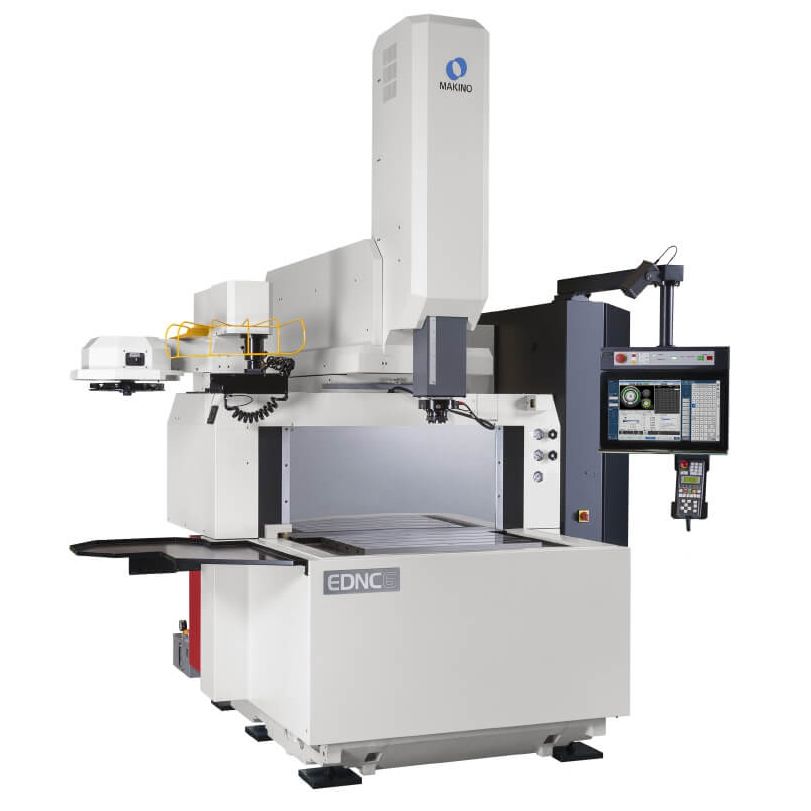
NCMT supplies Makino sinker EDM machines for precision machining of complex cavities, deep features and intricate forms in electrically conductive materials.
Sinker electrical discharge machining machines use a shaped electrode and controlled electrical discharges remove material without physical contact between the electrode and workpiece. The process is particularly suited to complex geometries, small internal radii, deep cavities and hardened or difficult-to-machine materials where conventional cutting methods may be limited.
The Makino sinker EDM range supports different requirements for component size, positional accuracy, surface finish, electrode management and production strategy, from general precision machining to ultra-precision and micromachining applications.
Our applications engineers work with manufacturers across aerospace, medical, automotive and motorsports and mould & die to assess component geometry, material, accuracy, surface-finish and production requirements and identify the most appropriate sinker EDM platform for the application.
Explore our range of sinker EDM machines and get in touch about selecting the right machine for your production requirements.
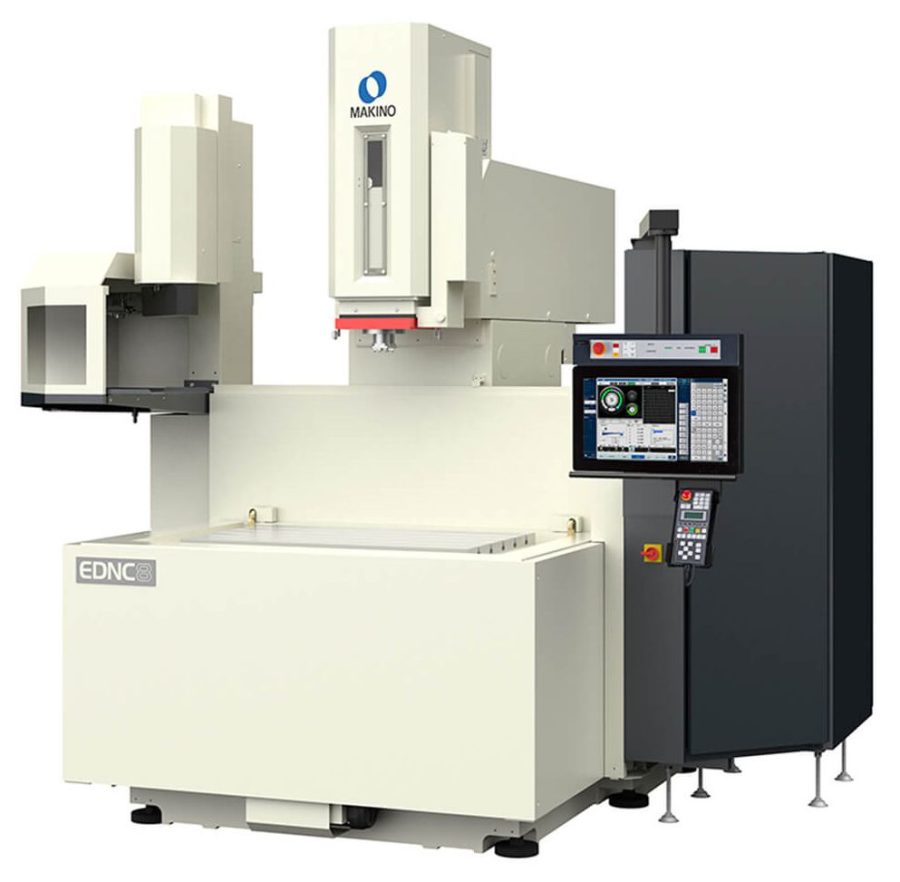
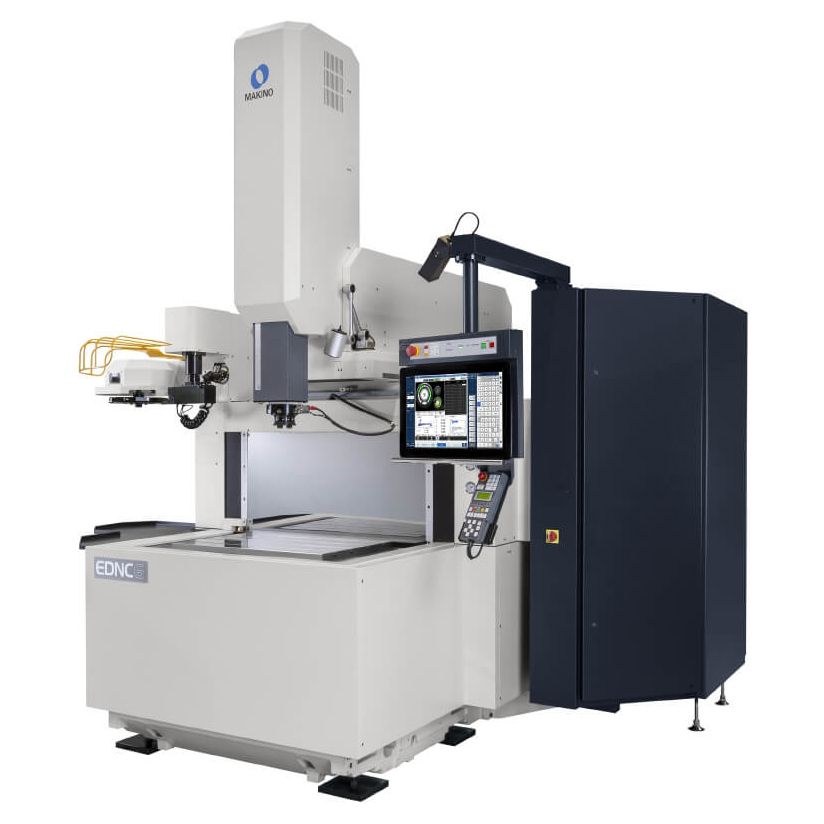
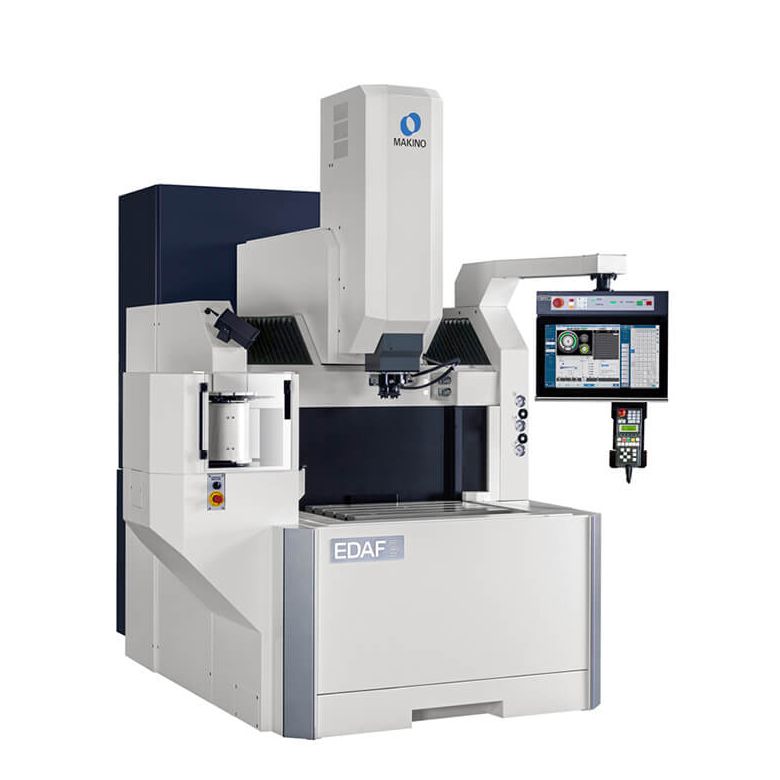
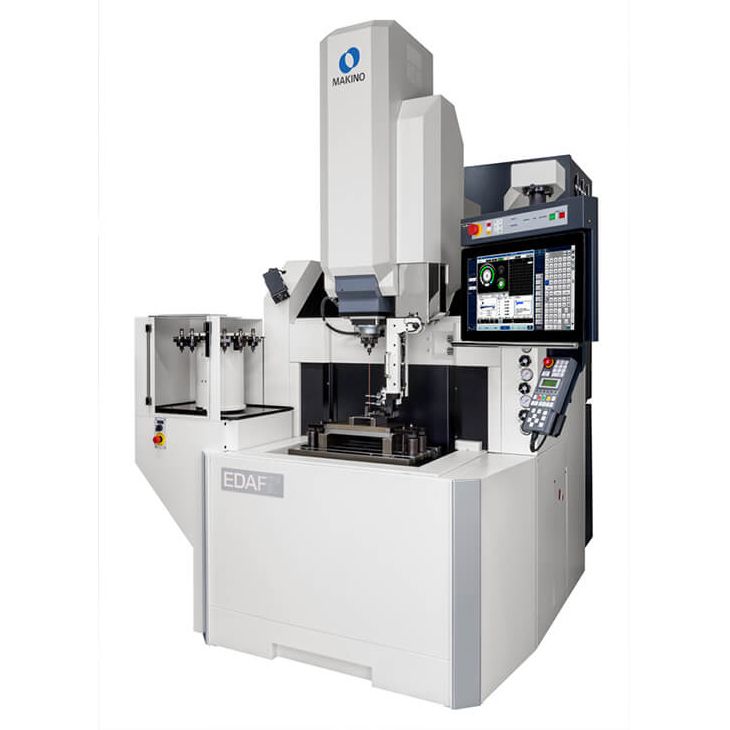
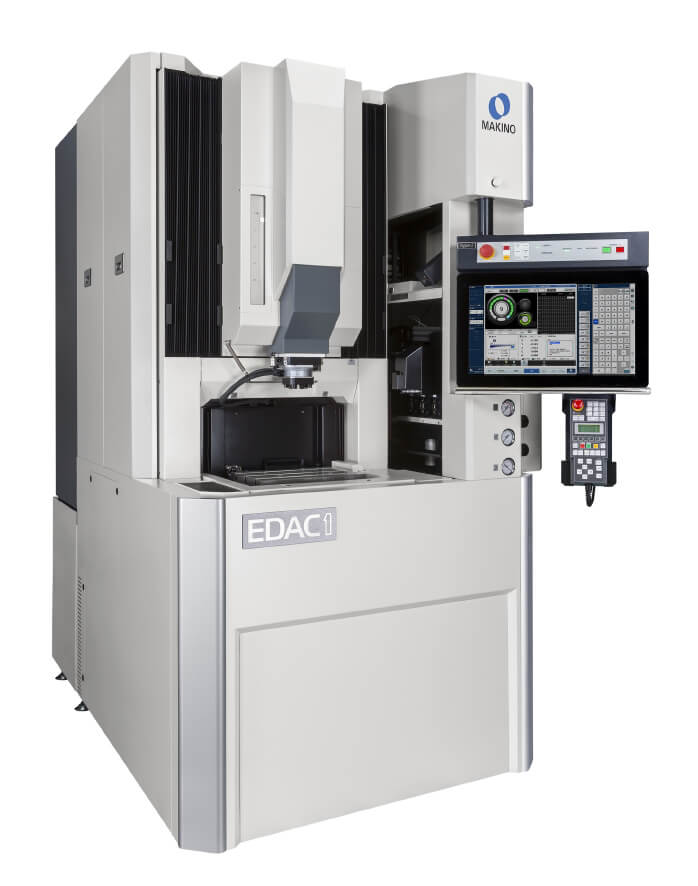
Sinker EDM becomes particularly relevant where component geometry, material condition or feature dimensions make conventional cutting difficult or impractical.
The process can produce deep cavities, narrow ribs, small internal radii and complex forms in electrically conductive materials without applying cutting forces to the workpiece. It can therefore be advantageous for hardened components, delicate features and geometries that would otherwise require very small or long-reach cutting tools.
The decision should be based on feature geometry, required accuracy and surface finish, electrode manufacture, cycle time and the complete production process rather than material hardness alone.
Electrode material can have a significant effect on machining speed, electrode wear, achievable surface finish and electrode manufacturing cost.
Graphite is widely used because it can support high material-removal rates, is relatively easy to machine into complex forms and offers good thermal stability. Copper can be advantageous where very fine finishes or particular feature requirements justify its use.
The appropriate material should therefore be selected according to feature geometry, required finish, discharge conditions, electrode wear target and the economics of producing and replacing the electrode.
Electrode wear should be considered alongside machining time and finished-part quality rather than as an isolated percentage.
Wear can affect cavity dimensions, corner definition, depth accuracy and the number of electrodes required to complete the process. Generator settings, electrode material, discharge energy, orbiting strategy and flushing conditions all influence the balance between material-removal rate and electrode consumption.
For production applications, the most effective process is therefore the one that achieves the required geometry and surface finish with an acceptable combination of burn time, electrode wear and electrode manufacturing cost.
Deep and narrow features create more difficult conditions for removing eroded material and maintaining a stable discharge gap.
The machining strategy should consider cavity depth, aspect ratio, electrode geometry, jump motion, flushing conditions and the ability to evacuate debris from the spark gap. Poor debris removal can increase cycle time, electrode wear and the risk of unstable machining.
Machine performance in deep-feature applications should therefore be assessed against the actual geometry rather than maximum Z-axis travel alone.
The required surface finish should be considered together with machining time, electrode material and the metallurgical condition of the finished surface.
EDM creates a thermally affected surface layer, so demanding applications may require consideration of recast, white-layer thickness and the risk of micro-cracking as well as numerical roughness values. Generator technology, discharge energy and finishing strategy can influence both surface texture and surface integrity.
For high-value components, machine selection should therefore consider the required functional surface condition rather than surface-finish specification alone.
The relationship between electrode geometry, spark gap and orbital movement influences final cavity dimensions, surface finish, flushing and electrode utilisation.
Orbiting can allow a smaller electrode to generate the required finished geometry while improving debris evacuation and distributing electrode wear more effectively. Different orbit patterns can also influence machining time and finish on sidewalls and complex forms.
Electrode undersize and orbit strategy should therefore be developed as part of the complete machining process rather than treated as independent programming settings.
A process study should demonstrate how the proposed machine, electrode strategy and machining conditions will achieve the required component quality and production target.
Depending on the application, this can include electrode material and quantity, roughing and finishing strategy, wear rate, cavity depth, flushing and jump behaviour, orbiting, expected cycle time, dimensional accuracy and surface finish. Where unattended machining is required, electrode changing, process recovery and monitoring should also be considered.
This provides a more meaningful basis for comparing sinker EDM platforms than machine specifications alone.