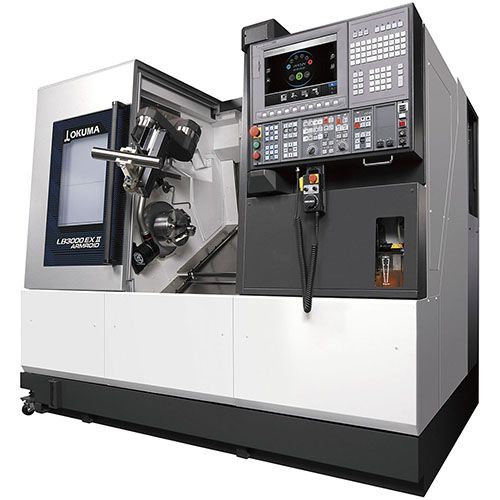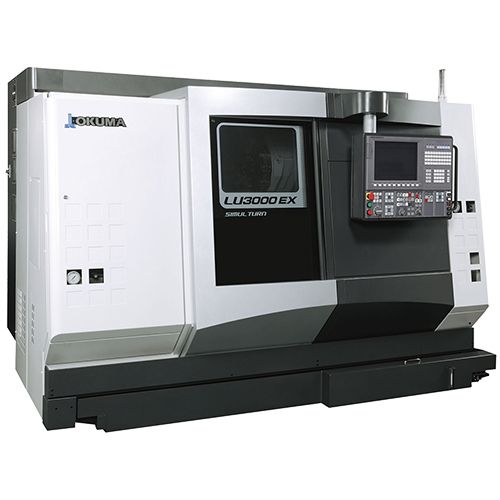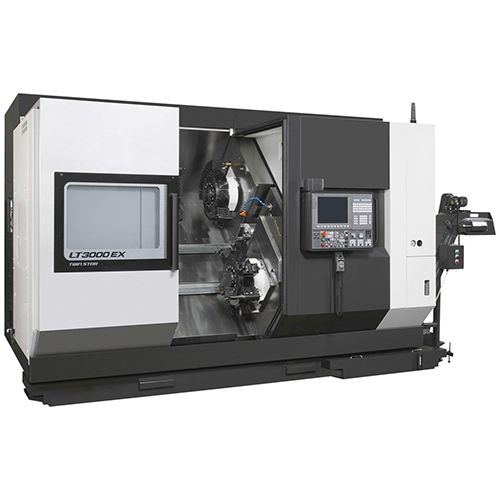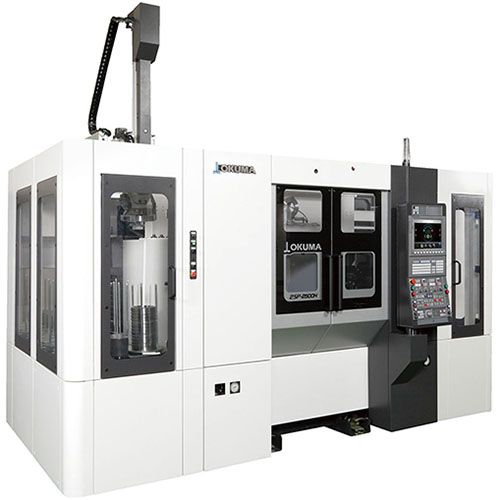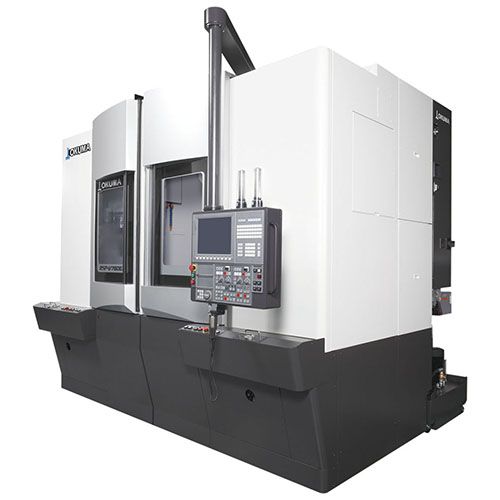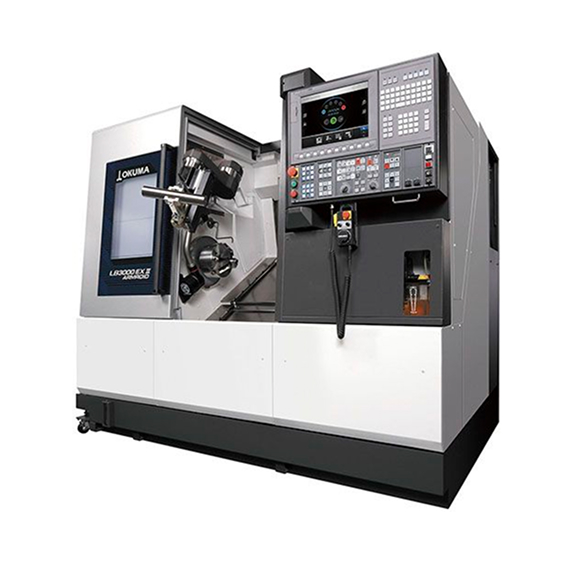
NCMT supplies Okuma CNC turning machines in single, twin and triple turret, parallel-spindle and vertical lathe configurations.
These CNC machine tools support different component geometries, production volumes and process requirements, from flexible single-turret machining to simultaneous multi-turret cutting, parallel-spindle production and the vertical turning of large-diameter or thin or irregularly shaped components.
NCMT’s applications engineers work with manufacturers across aerospace, automotive, energy, medical and mould and die industries to develop a machine and process configuration around the component and production objectives.
Explore our range of CNC turning machine and get in touch about selecting the right machine for your production requirements.
Selecting a CNC turning machine requires an assessment of the complete manufacturing process rather than an individual headline specification.
Key factors include component material and geometry, turning envelope, tolerances, surface-finish requirements, operation sequence, spindle speed power and torque requirements , tooling, workholding, cycle-time target and production volume. The specification should also consider, where required, driven tooling, simultaneous machining, component transfer, in-process measurement and automation before determining the appropriate CNC lathe configuration.
The advantage depends on how effectively the machining process divides operations between turrets or processes components concurrently across parallel spindles.
Multi-turret CNC lathes can reduce cycle time by balancing operations and enabling simultaneous cutting, while parallel-spindle CNC lathes increase throughput by machining more than one component at a time. The value of either configuration depends on tool access, operation balance, loading time, cycle-time requirements and production volume.
Evaluating CNC lathe spindle performance requires consideration of the component diameter, material, cutting data, tooling and duty cycle.
At smaller component diameters, maximum spindle speed may limit the achievable cutting speed. Torque is particularly important for demanding cuts at lower rotational speeds, while spindle power influences the machine’s ability to sustain the required cutting conditions and metal-removal rate.
Machine capacity should be assessed against the complete component and workholding arrangement, rather than the finished part dimensions alone.
Maximum turning diameter and length must allow sufficient clearance for the component, chuck, jaws and tooling, while spindle bore and bar capacity become particularly important for bar-fed or through-spindle work. Chuck size should reflect the component diameter, required gripping force and cutting loads. Where a family of parts is involved, the specification should also allow for the largest or most demanding components that the machine is expected to produce.
Accuracy should be considered in relation to the tolerances required on the finished component and the conditions under which those tolerances must be maintained.
Machine repeatability, structural rigidity, spindle performance and thermal behaviour all influence process stability during sustained production. For applications requiring tight tolerances, the evaluation should consider how the machine manages temperature change over extended machining periods, as well as the effects of tooling, workholding and cutting conditions on the complete process.
Driven tooling is appropriate where milling, drilling, tapping or other secondary operations can be incorporated into the turning cycle, reducing the need to transfer the component to another machine.
C-axis control provides controlled spindle positioning for operations such as radial and axial milling or drilling, while Y-axis movement extends the machine’s capability to produce off-centre features and more complex geometries. The decision should be based on the component features, required tool access, cycle-time benefit and whether consolidating these operations provides an advantage over separate machining processes.
Evaluating a CNC lathe against a target cycle time requires a review of the complete production cycle rather than individual machine speeds or rapid traverse rates.
The assessment should consider cutting time, tool changes, turret movements, spindle acceleration and deceleration, loading and unloading, workholding and any component transfer or measurement operations. On multi-turret or parallel-spindle machines, the balance between simultaneous operations is also important. A realistic cycle-time study should therefore be based on the component, tooling and proposed machining strategy rather than catalogue specifications alone.