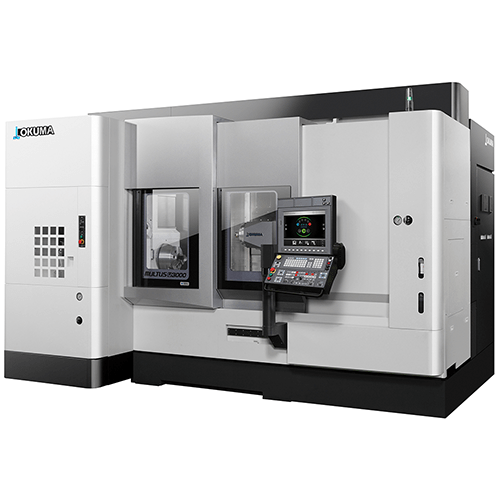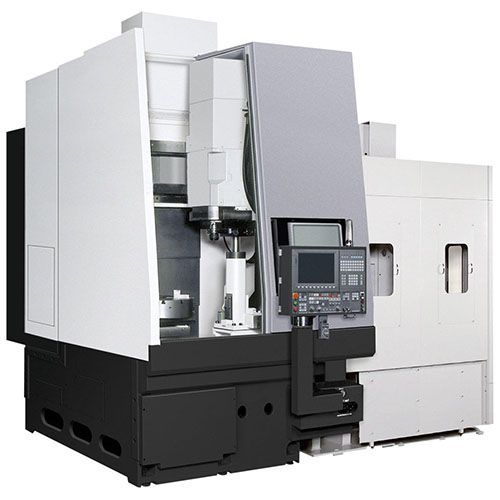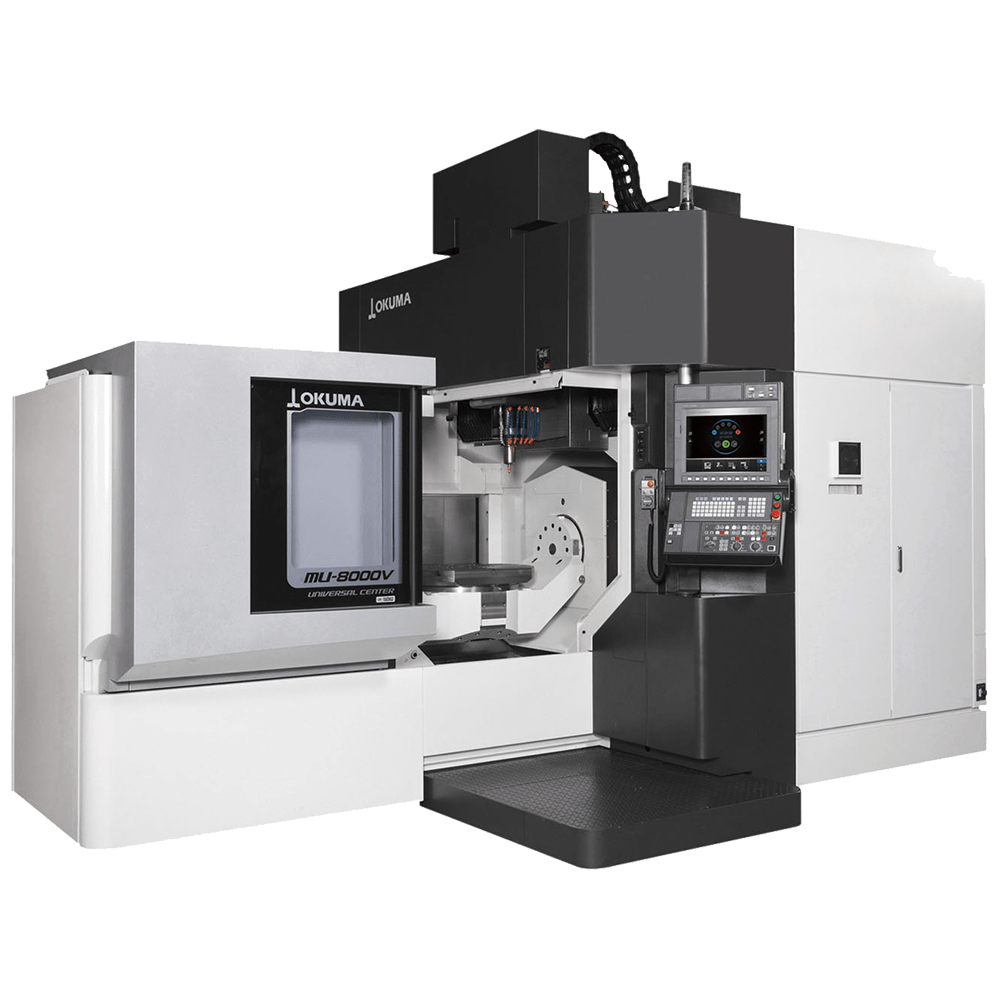
NCMT supplies Okuma multitasking CNC machines and in horizontal lathe, vertical lathe and vertical machining centre configurations.
These CNC machine tools combine turning and milling machining operations within one platform. Consolidating operations can reduce setups, workpiece transfers and non-cutting time while helping manufacturers maintain accuracy between machined features.
NCMT’s applications engineers work with manufacturers across aerospace, defence, energy, medical and mould and die industries to develop a machine and process configuration around the component, operation sequence and production objectives.
Talk to our team about selecting a multitasking CNC machine.
A conventional CNC lathe with live tooling can perform selected milling and drilling operations in addition to turning, but its capability is generally more limited by tool orientation, axis movement and access to the component.
A multitasking CNC machine is designed to combine turning and more advanced milling within a single platform. Depending on the machine configuration, this can include B-axis movement, Y-axis capability, automatic tool changing, larger tool magazines and sub-spindle machining, allowing more complex features and a greater proportion of the component to be completed in one set-up.
In many applications, a multitasking CNC machine can complete a significant proportion, or potentially all, of the required machining within a single set-up.
Whether complete machining is achievable depends on the component geometry, feature access, workholding, tooling and machine configuration. Platforms with B-axis capability, sub-spindles or suitable multi-axis movement can provide access to multiple faces and reverse-side features, reducing the need to move the component between machines or fixtures.
Specifying a multitasking CNC machine starts with the component material, geometry, dimensions and weight, together with the required tolerances, surface finish and machining operations
The evaluation also considers turning and milling requirements, spindle performance, axis configuration, feature access, tooling and magazine capacity, workholding, component transfer where applicable, cycle-time targets and automation requirements. Together, these factors determine whether a multitasking platform can consolidate the required operations effectively and reduce the number of set-ups.
A multitasking CNC machine is particularly advantageous when a component requires turning, milling and related operations that would otherwise involve multiple machines, setups or workholding positions.
Consolidating these processes reduces part handling, work in progress and variation introduced through repeated set-ups while helping to maintain the positional relationship between machined features. Whether these gains justify a multitasking platform depends on cycle balance, tooling requirements, machine utilisation and the economics of the complete production process.
Axis configuration governs the movement between the cutting tool and workpiece, determining which features the machine can reach in a single setup.
Y-axis capability supports off-centre machining, while B-axis movement allows the tool spindle to approach the component at different angles for angled and multi-sided features. Where fitted, a sub-spindle enables component transfer and machining of the reverse side. Simultaneous multi-axis movement further extends the range of achievable geometries, although the machining strategy must also consider tooling access, potential interference and workholding.
Multitasking machining can involve turning, milling, multi-axis movement, tool changes and, on some platforms, component transfer between spindles. The programming strategy therefore needs to coordinate these operations safely and efficiently.
CAM capability, post-processors, machine simulation and collision checking should all be considered when specifying the process. The programming approach should also reflect the machine configuration, tooling, workholding and required operation sequence so that the available multitasking capability can be used effectively.