 May 7, 2026
 A new chapter in gear innovation
The gear is one of the five simple machines in the Universe and so deceptively simply. It is also a high-performance part in many applications and therefore requires micron accuracy and high-quality surface finish. The previous generation of machine tool had limitations and often a lack of gear design knowledge by the operator for this specialist part that prevented production on high end applications on this platform. For decades, manufacturers have relied on bespoke, highly specialised machines for gear cutting. These processes also required specialist tooling adding to time and cost. Innovation in gear design has long been limited by the constraints of this machinery.
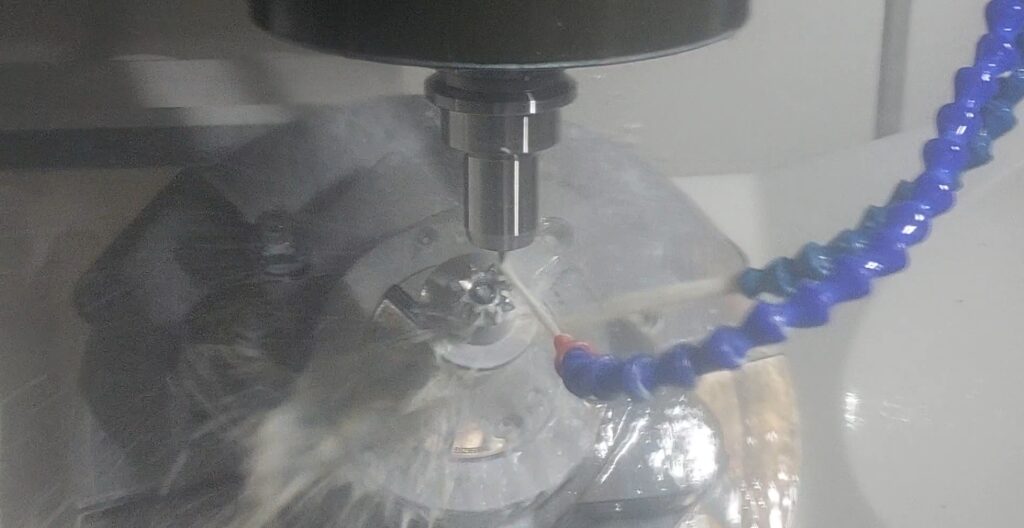
For Dontyne Gears, the combination of their pioneering software and the Okuma GENOS M460V-5AX machining centre supplied by NCMT has transformed what’s possible. Through this partnership, Dontyne Gears has not only proven the viability of manufacturing some of the most complex gear geometries on a standard 5-axis platform but has redefined how precision gear production can be achieved efficiently, flexibly and accurately to the highest industry standards.
Proving the impossible
Dontyne Gears sought a different path, to create intelligent software that could generate the code and cutting strategy directly from the gear design software to manufacture precision gears on a standard, multi-purpose machining centre using readily available tooling. To make that vision a reality, they needed a platform capable of extraordinary accuracy and adaptability.
That platform was the Okuma GENOS M460V-5AX a compact, rigid and thermally stable 5-axis vertical machining centre whose versatility has underpinned Dontyne’s journey from theory to proven process.
“The Okuma GENOS M460V-5AX gave Dontyne the flexibility and precision they needed to validate their groundbreaking software,” said Andrew Skee, Sales Manager, Northeast England and Scotland at NCMT. “It’s the perfect platform to push the boundaries of gear manufacturing, proving that you can achieve aerospace-level accuracy and repeatability on a machine that’s adaptable enough for a wide range of applications.”
From concept to capability
For Dr. Michael Fish, Director of Dontyne Systems, the investment in the GENOS M460V-5AX marked a decisive shift in how the company could demonstrate and refine its technology. The project was not without its challenges and through vigorous testing and reprogramming of the software by Dontyne the machine was able to aid in the development of a software module that enables gear projects for companies they would not have been able to pursue.
“Having the Okuma machine in-house allowed us to prove our software on real parts,” said Dr Fish. “We can now take a gear pair design checked for correct contact and simulate the machining cycle for it given tool selection, machine type. Once confirmed it can generate the code in seconds even for complex tooth forms and export a file to cut the gear and measure it all within our own cell. We had a SPRINT system from Renishaw plc fitted to the GENOS to measure cylindrical gears on the machine. That capability has been transformative. It has allowed us to show customers what’s achievable and after much testing we are often able to produce ISO 4-5 results on the first attempt.”
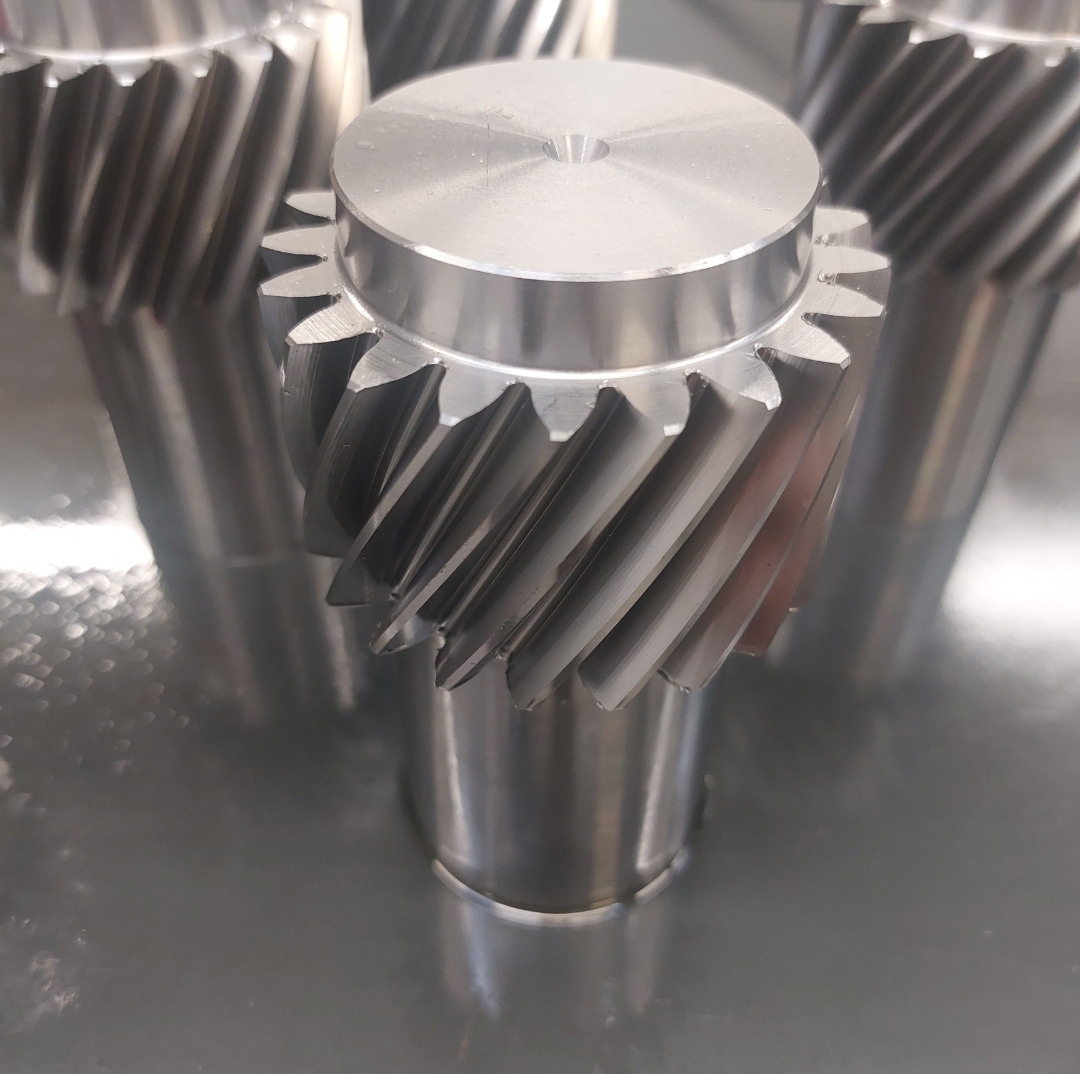
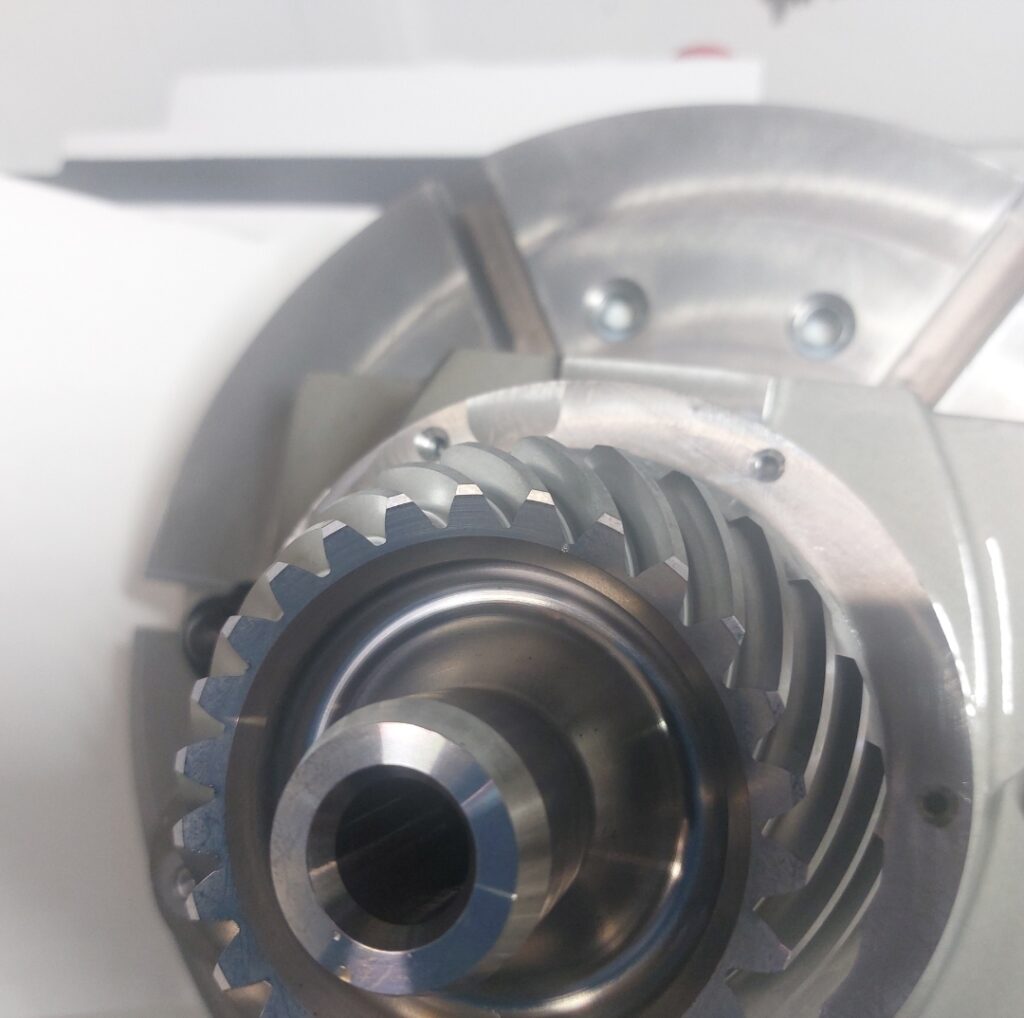
Dontyne’s software can generate complex tooth geometries that improve performance and durability, including subtle surface optimisation called micro geometry measured in just a few microns. Working in conjunction with the machine’s integrated probing and measurement systems, the team can verify precision directly on the machine a closed-loop process that drastically reduces setup time and eliminates the need for costly specialist tooling.
Intuitive platform
Kieran Brothwood, Applications Engineer at Dontyne Gears, has been instrumental in proving the process on the Okuma platform. Kieran represents a new generation of engineers comfortable blending software, data and manufacturing.
“Dontyne sponsored my studies to gain a BEng in Mechanical Manufacturing Engineering. I have had previous experience operating manual machining equipment, however, this was a step up into CNC 5-axis machining for me” Brothwood explained. “With some initial guidance for this type, it was relatively easy to make the step up. The control and setup were intuitive and once I understood how the software drives the process, it became a second nature. The results speak for themselves the gears come off the machine ready to run.”
This integration between digital design and real-world manufacturing is key to Dontyne’s ethos embracing the principles of Industry 4.0. The Gear Production Suite (GPS) from Dontyne systems allows the design of a virtual twin for a single gear or, preferably, a gear pair. It can then automatically generate G-Code of the exact tooth form and issue the same form by digital file to a range of inspection machines. The GENOS has had the SPRINT probe system from Renishaw plc fitted so that inspection can be carried out for cylindrical gears external and internal if geometry permits. The use of GPS can ensure that the part is machinable and can be suitably inspected before the design is finalised.
For NCMT, Dontyne Gears’ success on the Okuma demonstrates the innovation unlocked when premier machine tools are paired with engineering expertise.
“Dontyne’s work showcases exactly what’s possible when you combine advanced software with a truly capable machine tool,” said Andrew Skee. “The GENOS M460V-5AX is more than just a production centre it’s a platform for innovation. By providing the stability, accuracy and flexibility required, it’s helping to prove that highly technical gear geometries can be machined efficiently without relying on dedicated equipment.”
Redefining the standard
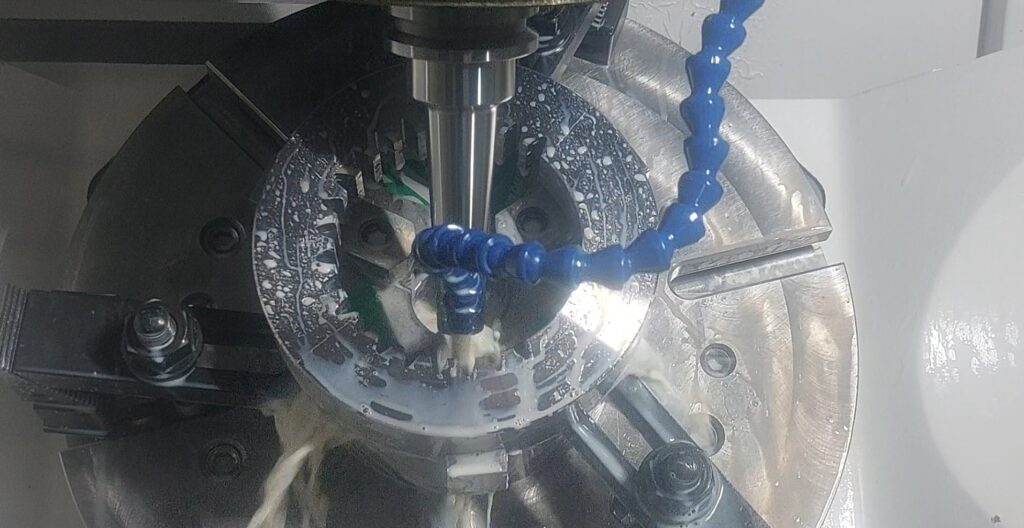
A major part of this innovation lies in the remarkable versatility of the system. Dontyne’s software has demonstrated the ability to cut a wide range of gear types on a 5-axis machining platform including spiral bevels, hypoids, helicals, internal gears and non-regulation special-profile forms.
Traditionally, each of these forms would require a different dedicated machine often costing millions and capable of only a single tooth cutting process.
By enabling all of these geometries to be cut on one flexible machine, with one unified software environment, Dontyne has challenged long-standing assumptions in the gear industry and what once took months can now be done in days. Further, tooling for traditional production can be expensive costing thousands and add weeks to lead times for each design and these will be useless if produced incorrectly or due to design changes. Whereas the GENOS system can utilise readily available and low-cost End Mill tools.
As Fish explains: “We’ve shown that with the right software and the right machine, you can produce these parts with incredible precision. It’s not just a technical achievement; it’s a business one. Manufacturers now have a viable, flexible alternative to traditional production that will significantly reduce gear production cost and time. Stepping up to a Multus would enable a complete part to be produced in the soft condition on one machine”
Industry Recognition
It is not just manufacturers who are standing up and taking notice to these technological advancements in gear production. The British Gear Association (BGA) has played a crucial role in accelerating awareness in the industry by funding a study of the method by Dontyne. Recognising the exceptional results that had been achieved by Dontyne and the potential of the current flexible machine tools for the industry, the BGA provided further support to investigate production of other gear geometries.
Throughout the development process, the BGA committee has served as both a challenger and a validator.. There was an initial literature review and consultation with several industrial members that revealed existing solutions were incomplete and unreliable making the method difficult to use and adopt. This reinforced the necessity and significance of Dontyne’s work.
Dr Fish said “By challenging claims, validating results and supporting further adaptations, the BGA is helping us establish further credibility around this approach to gear manufacture by peer review of projects relating to 5-Axis CNC production. Their backing not only enabled technical progress but has also given industry recognition that our methods address long-standing limitations in conventional gear-making practice.”
Machining possibility
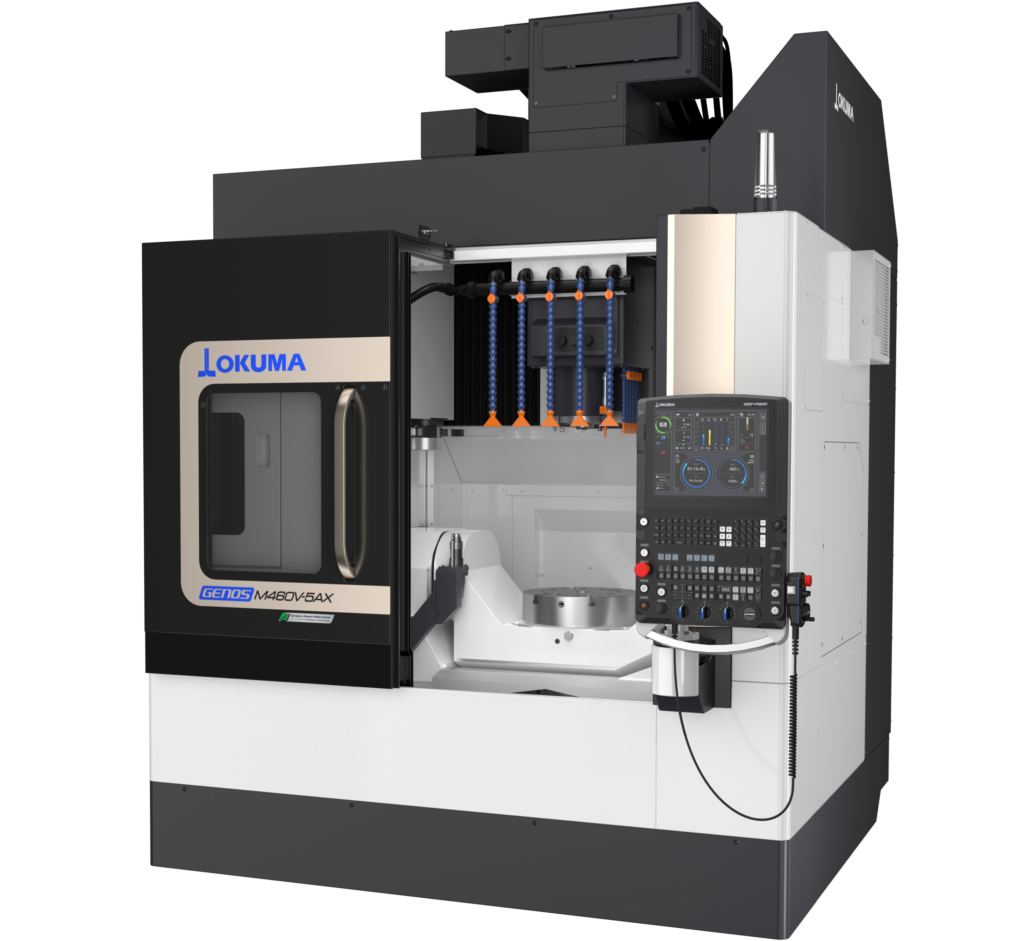
By combining their unique software with Okuma’s 5-axis technology and NCMT’s support, Dontyne Gears has not only advanced their own capabilities but opened new doors for the entire industry. It’s proof that the right partnership can turn vision into reality and that with the Okuma GENOS M460V-5AX, even the most complex engineering challenges like gear manufacturing can be met head-on.
As Skee says, “This isn’t just about a machine, it’s about empowering innovation. The GENOS M460V-5AX gives companies like Dontyne Gears the confidence to prove what’s possible.”